

 Which package fits you?Find out in 8 questions.


Published , last updated , by Berkay Abay, founder
What makes a good business website?
A good business website lets someone who has never heard of your business find what they are looking for quickly and contact you with confidence. That takes five things: a clear page structure that explains the business, company details and legal texts that show who you are, pages that load fast on a phone, an interface everyone can use, and tracking that shows how many inquiries the site brings in.
Visual design is built on top of these. An impressive opening section does not help if visitors cannot tell what the service is or how to ask for a quote. How we work on business websites and how delivery runs are explained on our web design services page. The list of what to prepare before asking for quotes is in our article on hiring a web designer.
Which pages should a business website have?
For most businesses, the core structure is a home page, an about page, services or products, references, contact and legal texts. Giving each service its own page makes it easier for visitors to find what they need, and it lets you appear with a dedicated page in searches for that service.
The questions customers ask most often can be collected in an FAQ section. If you plan to publish content regularly, a blog is added to the structure as well. A good way to decide which pages you need is to think about the questions a customer wants answered before asking for a quote.
| Page | Its job | What it should contain |
|---|---|---|
| Home page | Explain what the business does on the first screen | A one-sentence description, main services, trust signals, a way to get in touch |
| About | Show who you are | Company background, team, way of working, certificates |
| Services or products | Explain each service separately | Scope, process, who it is for, frequently asked questions |
| References | Prove the work you have done | Client names shared with permission, project images, reviews |
| Contact | Receive the inquiry | Form, phone, email, address, opening hours, map |
| Legal texts | Meet legal obligations | Privacy notice (KVKK in Türkiye), cookie policy, terms of use where needed |
Depending on the industry, pages such as careers, certificates, press or branches can be added.
Trust signals: company details, contact and legal texts
Visitors want to know that a real business is behind the site. The registered company name, a full address, a phone number, a business email on your own domain and, where applicable, tax and registration details should appear on the contact page or in the footer. A personal email address or only a mobile number weakens that sense of trust.
On the legal side, for businesses in Türkiye, Article 3 of Law No. 6563 on the Regulation of Electronic Commerce requires a service provider that enters into contracts through electronic communication tools to present its identifying information in an up-to-date form that recipients can reach easily. If your site takes orders or paid bookings, this article applies to you directly. On a site that only presents the business, keeping the same details visible is still good practice.
Sites that use a contact form, a booking form, or analytics and advertising cookies need a privacy notice under KVKK (Türkiye's personal data protection law) and cookie information. These texts should be written for your business and approved by a lawyer before launch. This section is not legal advice; consult your lawyer about your own situation.
Speed and mobile: Google's Core Web Vitals thresholds
A large share of visitors to a business website arrive from a phone. For them, the basic expectations are that the page opens quickly, responds to taps without delay and does not shift while it loads. Google tracks these three things with three measurements called Core Web Vitals.
As of November 2026, according to the Web Vitals page on web.dev, a good experience means the largest content element loads (LCP) within 2.5 seconds of when the page first starts loading, the response to interaction (INP) is 200 milliseconds or less, and the layout shift score (CLS) stays at 0.1 or less. The same page recommends measuring at the 75th percentile of page loads, separately for mobile and desktop.
Google Search Central's Core Web Vitals page states that good Core Web Vitals, together with other aspects of page experience, align with what its core ranking systems seek to reward. That does not mean a fast site will rise to the top on its own. If the content and page structure are weak, speed alone does not change the outcome.
| Metric | What it measures | Good threshold |
|---|---|---|
| LCP (Largest Contentful Paint) | Loading | 2.5 seconds or less |
| INP (Interaction to Next Paint) | Response to interaction | 200 milliseconds or less |
| CLS (Cumulative Layout Shift) | Visual stability | 0.1 or less |
Source: web.dev, Web Vitals page, as of November 2026. Values are assessed at the 75th percentile of page loads, separately for mobile and desktop.
Accessibility: what does WCAG ask for?
An accessible site is one that people with visual, hearing or motor impairments can also use. The international standard for this is the Web Content Accessibility Guidelines (WCAG), published by the W3C. According to the W3C's official overview page, the latest version is WCAG 2.2, published on October 5, 2023, and the W3C recommends using the latest version.
WCAG groups its content under four principles: perceivable, operable, understandable and robust. Each guideline has testable success criteria at three levels: A, AA and AAA. On a business website, in practice, these principles mean writing meaningful alternative text for images, leaving enough contrast between text and background, making every menu and form usable with a keyboard, and labeling form fields clearly.
Search visibility: Google and AI search
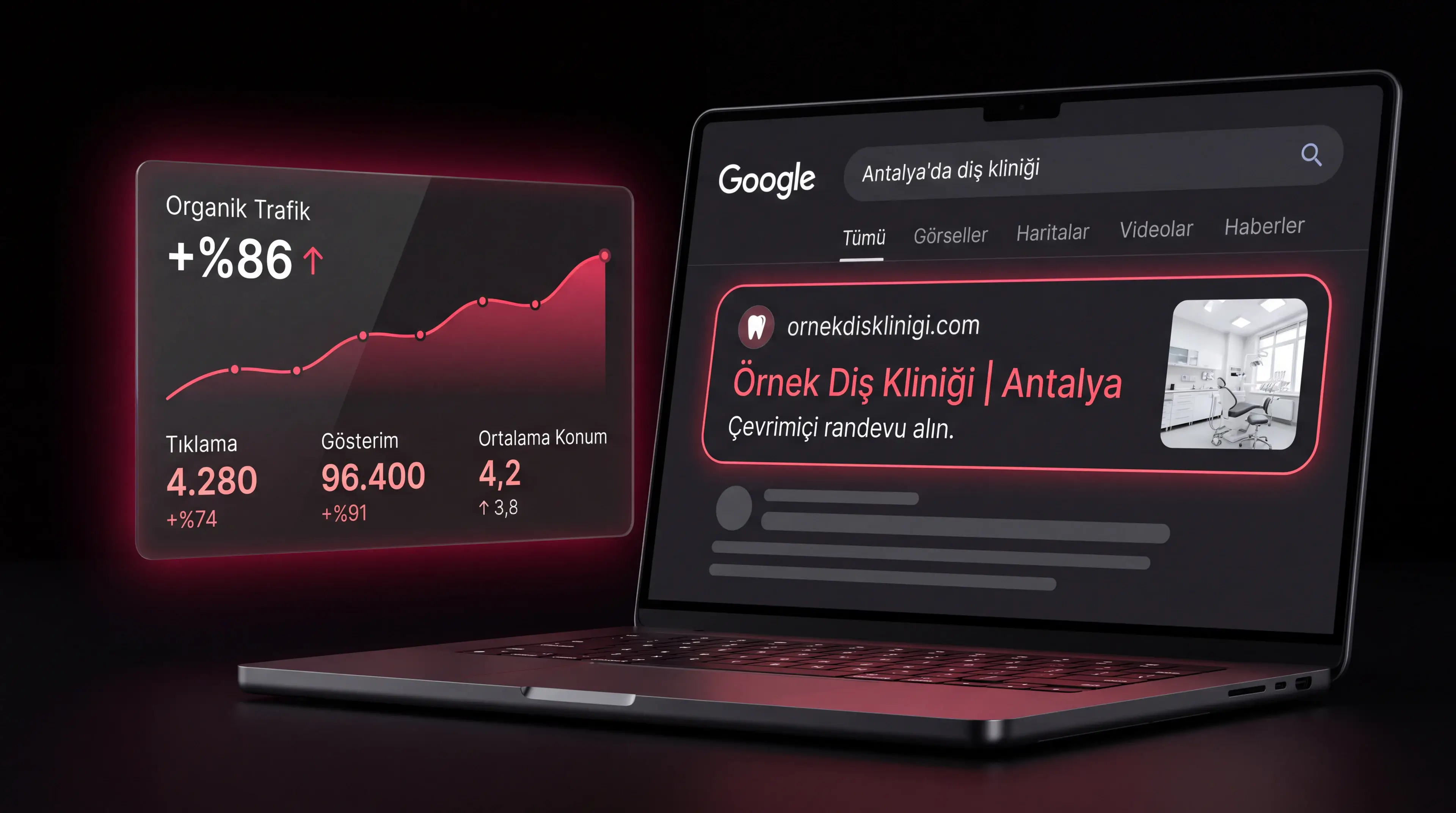
Google's SEO Starter Guide recommends a unique, clear and concise title for each page, a description that summarizes the page, URLs with meaningful words, and alternative text that explains how an image relates to the content. According to the guide, what affects search visibility most is content that people find helpful, easy to read, original and up to date.
The same guide says the effect of a change can take anywhere from a few hours to several months to show, and suggests waiting a few weeks before judging the result. So on a business website, service pages that answer the questions customers actually ask matter more than expecting quick results. The work involved in being cited in answers from assistants such as ChatGPT and Gemini is covered separately in our article on generative engine optimization. No work can guarantee a specific position.
Tracking: is the site working?
According to Google's help page, Search Console is a free tool for monitoring the site's presence in Google Search, seeing indexing problems and reviewing which queries show the site and how often it is clicked. Every business website should be added to Search Console and have its sitemap submitted when it goes live.
Search data alone is not enough. If form submissions, phone clicks and WhatsApp clicks are measured as separate events, you can see how many inquiries the site brings in. Search Console, Analytics and advertising accounts should be opened in the business's own name, and the company working on the site should only be added as a user with access.
Maintenance after launch
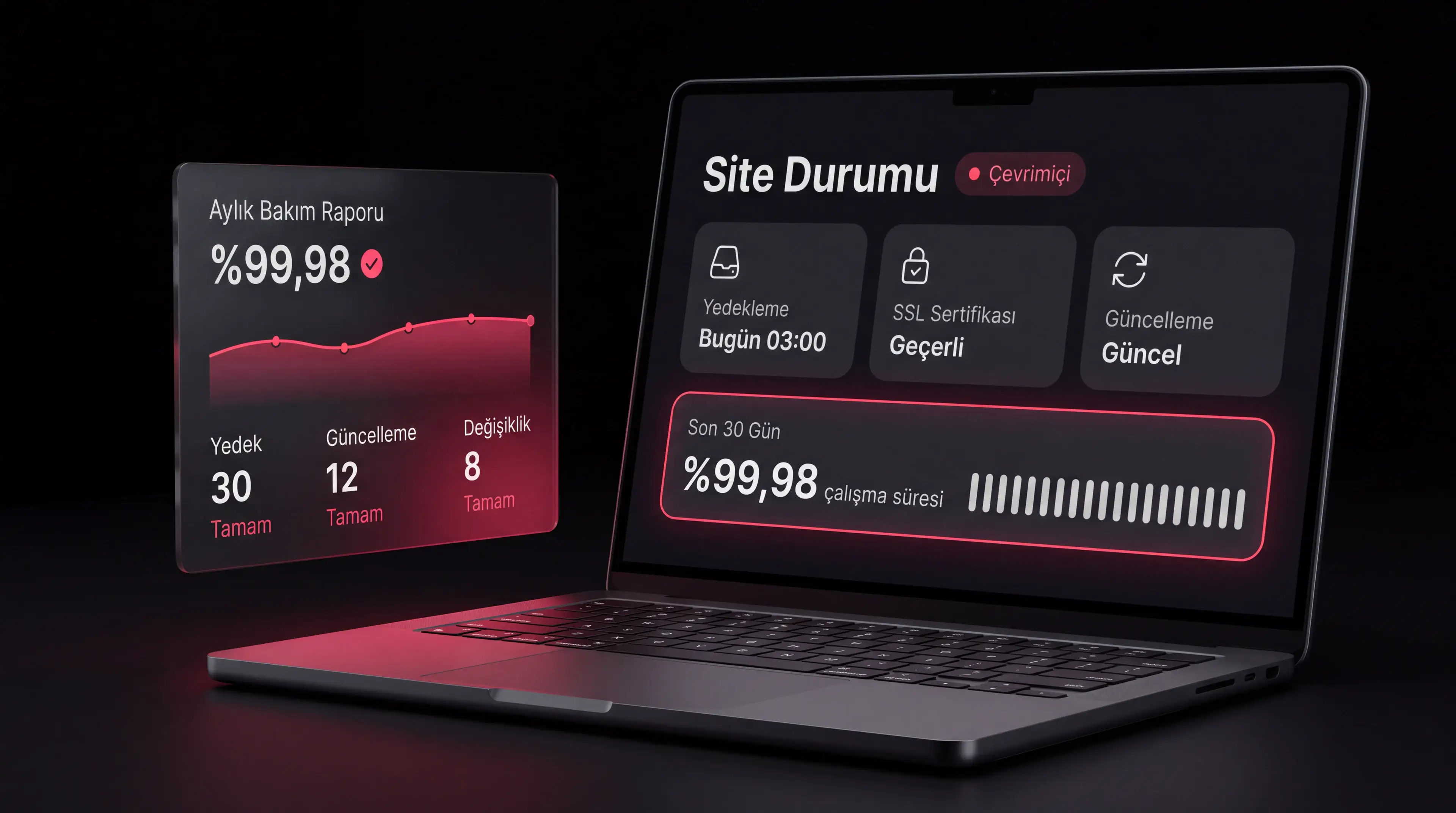
Once the site is live, tracking domain and SSL renewals, software updates, regular backups, checking that forms work and small content changes are ongoing tasks. If they are not done, the site may stop opening one day, or inquiries from the form may get lost without anyone noticing.
As of November 2026, our monthly maintenance packages for business websites cost $60 to $130, excl. VAT. Our prices are set in Turkish lira; the US dollar amounts in this article are converted at today's Central Bank of the Republic of Türkiye (CBRT) rate. What maintenance covers is explained in our article on why website maintenance matters, and the tiers are on our website maintenance services page.
Prices are set in Turkish lira and exclude VAT. USD amounts use the Central Bank of the Republic of Türkiye rate of November 12, 2026 (1 USD = ₺50.17).
How many pages do you need, and which package fits?
The number of pages has the biggest effect on the scope of a business website. In our packages, the page count is set as follows: Starter: 5-7, Standard: 8-12, Premium: 13-20. As of November 2026, our business website packages cost $359 to $1,097, excl. VAT.
For businesses with several services that want a look of their own, a blog and a booking form, the Standard package is often enough. It includes 8-12 pages, and keyword research, schema and speed optimization, and Search Console, Analytics and form tracking are part of the setup. If the page count or your needs go beyond the packages, we prepare a custom quote. For the questions to ask when choosing an agency, see our article on how to choose a web design agency.
| Package | Pages | Design | Delivery | Price |
|---|---|---|---|---|
| Starter | 5-7 | Simple design built from ready-made section layouts | 3-7 days | $359 + VAT |
| Standard | 8-12 | Custom design for your brand | 7-11 days | $598 + VAT |
| Premium | 13-20 | Custom design with animation and interaction | 12-21 days | $1,097 + VAT |
| Custom | On request | On request | On request | From $1,296 + VAT |
Prices are as of November 2026 and exclude VAT. Delivery time starts once all content and images have arrived. The full scope of each package is on our pricing page.
Frequently asked questions
How many pages should a business website have?
It depends on how many services you offer. A home page, an about page, contact and legal texts, plus a separate page for each main service, is a good start. For businesses with several services, the 8-12 pages in our Standard package are often enough.
Do I have to show company details on a business website?
In Türkiye, Article 3 of Law No. 6563 requires a service provider that enters into contracts online to present its identifying information in an easy-to-reach, up-to-date form. On sites that only present the business, showing the company name, address and contact details clearly is still recommended for trust. This answer is not legal advice; consult your lawyer about your own situation.
How can I measure my site's speed?
The Core Web Vitals report in Search Console shows the LCP, INP and CLS values of your pages. As of November 2026, according to the Web Vitals page on web.dev, the good thresholds are 2.5 seconds for LCP, 200 milliseconds for INP and 0.1 for CLS. Assess mobile and desktop separately.
Can I update my business website myself after it is built?
That depends on whether the site has a content management panel. In our packages, Standard includes a blog post editor and Premium includes a content editor for every page. Without a panel, changes are made as part of the maintenance service.
Sources
- web.dev: Web Vitals, accessed
- Google Search Central: Understanding Core Web Vitals and Google search results, accessed
- W3C WAI: WCAG 2 Overview, accessed
- Google Search Central: SEO Starter Guide, accessed
- Google Search Console Help: About Search Console, accessed
- Ministry of Justice of Türkiye: text of Law No. 6563 on the Regulation of Electronic Commerce (in Turkish), accessed
Related pages: Web design services and website packages and pricing.